JM+JM
Gaudete Sunday, 2025
There are only three books, to date, that I have loved to the point where I underlined almost every page. I guess you could surmise that these are my favorite books of all time and I can’t wait to share with you their titles, and WHY I love them so. I’ve been an avid reader ever since middle school and part of my own unique writing style that has developed over the years is directly linked to what I have read recreationally and also what I read theologically. My range is so wide that one moment you will find me enjoying Aragorn decapitate orcs in The Lord of the Rings and the next moment I’m lost in a Jane Austen themed novel or a priceless fairy tale romance where the Prince saves the day and rescues his damsel.

In this age of disgusting cancerous feminism where women have to “save themselves” (whatever that even means) I am the first to say I have absolutely no problem expressing publicly that I don’t mind letting the Prince save the Princess (the waiting part stinks, though, to be sure) or being the sleeping bride who simply “waits” to be awakened by the King of the universe. I’ve always been a fan of sleeping.
At least “sleep” is an option in the wait! I don’t want to “save myself”. That’s so… stupid? I want to be saved. Isn’t this what Gaudete Sunday is all about, however? It is US anticipating the coming of our Savior, the coming of our Bridegroom. I wrote about this before, but we know Our Lord loves these types of short stories, as well, because He shares them all over the New Testament. These so called “fairytales” just have a different name: Parables.
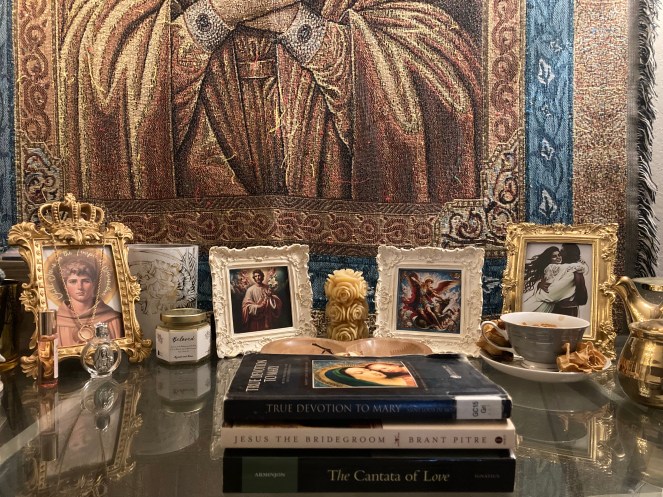
What are these three books I “introited” in this post? True Devotion to Mary by the fiery Saint Louis De Montfort, Cantata of Love (verse for verse break down of the Canticle of Canticles) by Blaise Arminjon and Jesus the Bridegroom by Brant Pitre. I read the second two this 2025; BOTH gifts from my Sister Martyr Princess, Aflavia.

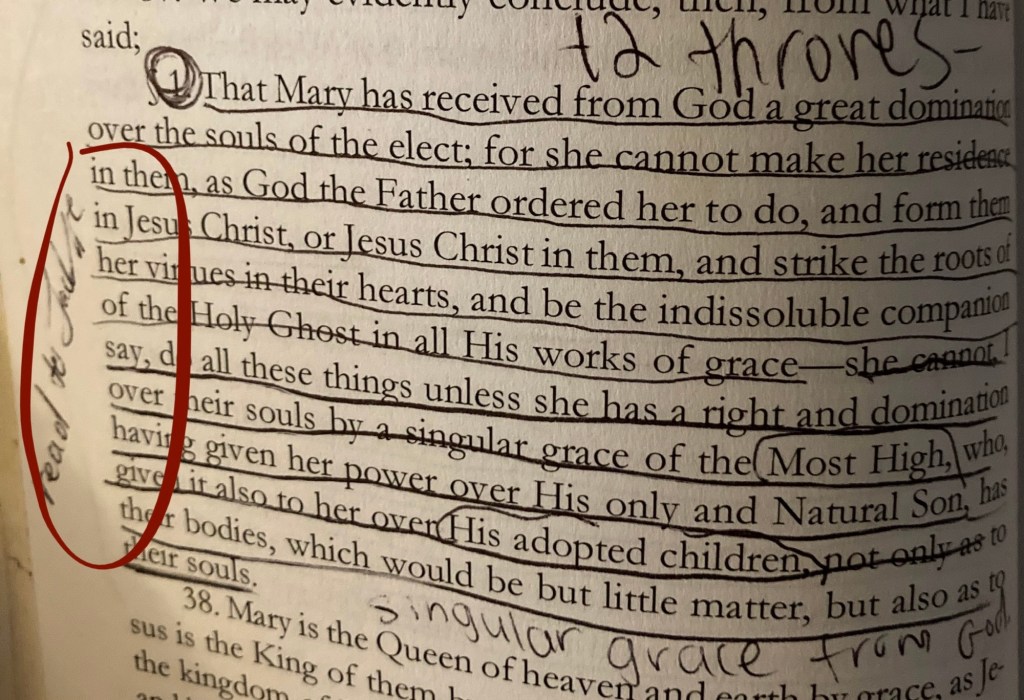
I read True Devotion to Mary when I was 20 years old, in 2014, directly after returning from Rwanda, Africa and immediately completed my first 33 day consecration “De Montfort style” on the glorious feast of the Immaculate Conception, at my local college parish. My best friend at the time, Jackie, and I took this book so seriously that we stayed up late hours into the night and dreamed of spreading love of Mary everywhere. We would underline practically the whole book, and as proof, I even have a little note I wrote near an underlined paragraph, a mere 12 years ago, “read to Jackie!”. Here’s the proof:
I had a friend once tell me that “Jackie is preparing you for marriage.” At the time, I truly thought earthly marriage, but when I look back, I am utterly amazed that it was indeed Jackie who prepared me for the Bridegroom: the King of kings. Jackie is now married and I have nothing but gratitude for our past friendship. It indeed was one of the “best”. We attended the Latin Mass together, were roommates at one point, we both had officer positions with the Students for Life praying in front of Planned Parenthood on Saturdays and prayed Seven Sorrows Rosaries and Holy Rosaries together.
We even led a little group called “Mary’s Field.” A type of vineyard! It was truly nothing but a Christ and Mary centered friendship. We became so alike that people would mix our names up (we also looked alike) and we would finish each other’s sentences or react the same way to homilies by looking at each other with big smiles or even gasp at the same time (this happened at a Church event once after the speaker said something that made us make the same gasping noise AT THE SAME TIME even though we weren’t sitting near each other and people around us laughed in surprise). Oh I recognized her gasp and she recognized mine, and we looked at each other from our separate seats and chuckled.

It got to the point where other parishioners marveled at how we finished each other’s sentences if they were there to witness it. I had never experienced anything like this in a friendship ever again, until I met Aflavia (my Samwise). This holy friendship with Jackie lasted from the time I got back from Africa, 2014, to the time I got back from the Camino, Spain, 2015, the following Summer. That year between trips I took a year off of college (dropped out the following year) and it indeed was essentially a year of “preparation”. Marriage prep through Jackie?
All I did was work a few jobs, go to Daily Mass, read and re read True Devotion to Mary and spend as much time as I could with Jackie. But then something changed, and at the time, it was devastating. When I returned from Spain, on the 4th of July to be exact of 2015 (how patriotic), a dear friend of mine named Linda O’Brien, a very holy 3rd order Franciscan of the Immaculate, took me to a First Saturday Mass in Denver where I heard the call to be Christ’s bride. Jackie also met her future husband that Summer. Something shifted, against our will, in our beloved friendship.

We both could see an invisible wedge, so to speak, dividing us. All the sudden we were both on two different paths and they didn’t align anymore. It pained us both. One day I took this matter to our parish priest and told him I simply didn’t understand why Our Lord would be dividing a holy friendship like this. It was baffling and unnerving, to put it mildly. I’ll never forget Father’s nonchalant tone as he rested his hand on his chin and said so matter of factly:
“Jesus got a little jealous.”
I was half perplexed, half elated! I think I remember smiling automatically because I definitely thought it was kind of romantic. You won’t believe how this all ties into the book Jesus the Bridegroom and the mysterious betrothal of the woman at the well. I’ll end this post with how this ties into Jackie. If I had to do a book review on Brant Pitre’s absolutely breathtaking and stellar book, I would have much to say and… honestly, I wouldn’t even know where to begin because every page is a priceless pearl.
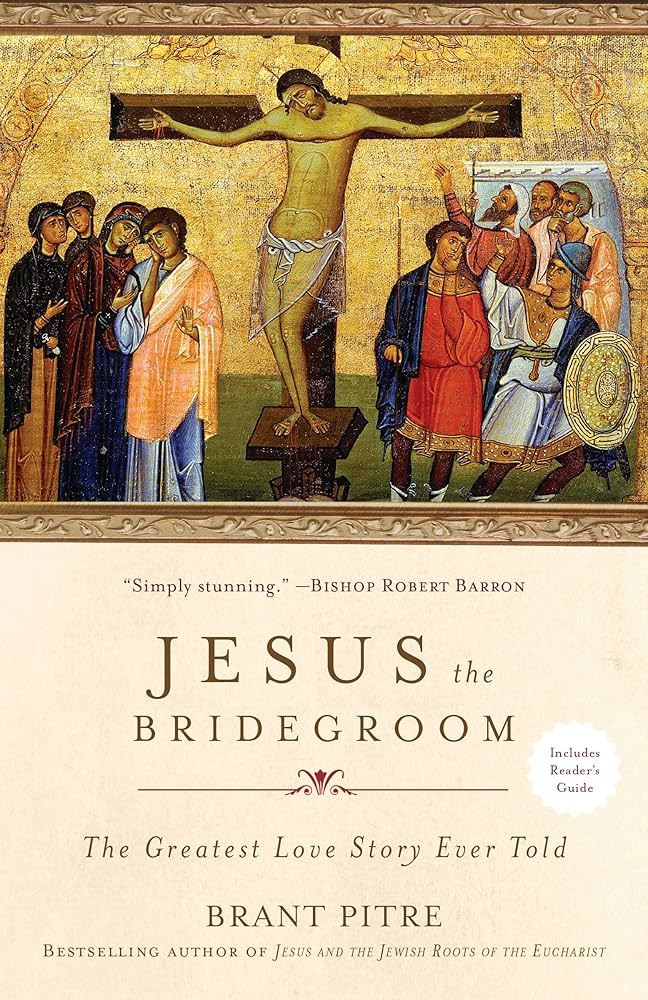
Rather, I will laser focus on my favorite part of the book. The reason why he titles his work “Jesus the Bridegroom” is because, from the beginning of time God has set Himself up as Husband to His people. He is not just “Creator”, as the Prophet Isaiah (54:5) reminds us: “your Creator will be your Husband”. The Bible begins with a wedding, and the Bible ends with a wedding.
And smack dab in the middle, as I have mentioned before through my Sister Martyr Princess Aflavia pointing this out to me, right in the middle of the Bible is the story of union: the Song of Songs: MARRIAGE. This is where Pitre takes a rather Divine Turn in his studies of Jesus as Bridegroom and His mysterious meeting with the woman at the well:
Male Foreigner+Woman+Well=Betrothal.
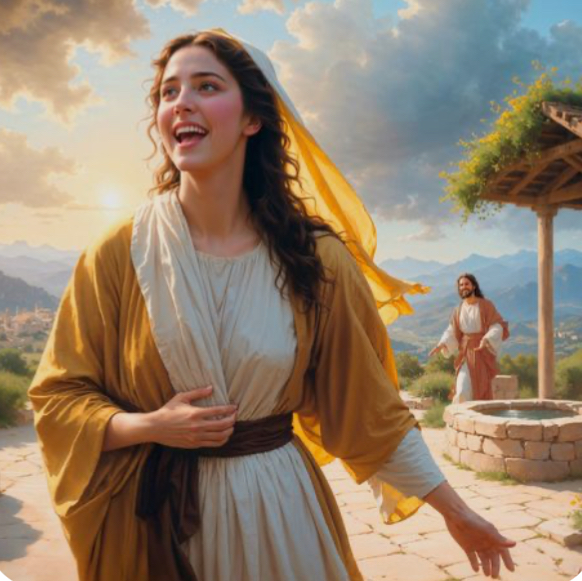
Yes, you read that right. Remember when the apostles find Our Lord with the woman at the well in Samaria and they are, well, confused? We are led to think that this is because she is a Samaritan, perhaps. We know Our Lord cured and spoke with several women and so we know from scripture that Him conversing with women in general was not surprising. But here, it’s not the pharisees expressing wonder, but His apostles. Why is this? Because, not only was this JACOB’S well, but it was also a common meeting place of betrothals. Jacob met Rachel at that very well, his future wife, and Moses also met Sephora at a well.
BOTH Moses and Jacob were “foreigners” and so it did not take the apostles long to see Our Lord, as a “foreigner”, near not only a well, but JACOB’S well. This was a “green light” for betrothals, so to speak, and it did not go unnoticed by the apostles. I wish I could have been in Our Lord’s head at these encounters with His apostles as I am sure He knew they were often shocked at the God Man’s mysterious ways. Pitre even jokes and says even when the apostles can be rather “dense” at times, even they knew what speaking to a woman at a well meant. They knew these encounters often led to a wedding!

But why the Samaritan woman and what does she represent? The gentile bride, of course. And the Catholic Church? She is indeed the gentile bride. All over the Old Testament we read about what Brant Pitre calls “God’s estranged wife”, who, keeps turning away from Our Lord, and He patiently waits for her “return”. The only other quote in the book I will add here in this post to confirm this, because it is so beautiful, is a quote he uses from Saint John Chrysostom:
“Pay attention to love’s high standards. If you take the premise that your wife should submit to you as the Church submits to Christ, then you should also take the same kind of careful, sacrificial thought for her that Christ takes for the Church. Even if you must offer your own life for her, you must not refuse. Even if you must undergo countless struggles on her behalf and have all kinds of things to endure and suffer, you must not refuse. Even if you suffer all this, you still have not done as much as Christ has for the Church. For you are already married when you act this way, whereas Christ is acting for one who has rejected and hated Him. So just as He, when she was rejecting, hating, spurning and nagging Him, brought her to trust Him by His great solicitude, not by threatening, lording it over her or intimidating her or anything like that, so you must also act toward your wife. Even if you see her looking down on you, nagging you and despising you, you will be able to win her over with your great love and affection for her.” (Homily on Ephesians 20:5:25)

We see different women all over the New Testament representing a type of the Church: the woman suffering the issue of blood, the Magdalen and her alabaster jar and even Veronica, though not biblical, represents a type of the Church. The Samaritan woman perhaps comes the closest because her sinful past perfectly represents the return of the bride, the Church, to her Bridegroom, and now that we know what we do about what happens at wells, is not it clear enough? We see this constant solicitude, Saint John Chrysostom speaks of, from Our Lord to His bride, “Jerusalem”, the Catholic Church ALL OVER THE DIVINE OFFICE AND MASS READINGS during specific seasons in the liturgical calendar.
During Advent He tells her:
“Lift up, O JERUSALEM, thine eyes, and see the might of thy King: behold the Savior comes to loose thee from thy bonds.”
“JERUSALEM, thy salvation cometh quickly: why are thou wasted with sorrow… WEEP NOT.”
On Gaudete Sunday He tells her:
“REJOICE, O JERUSALEM, with great joy, for thy Savior will come to thee, alleluia.”
In the final week before Christmas, Our Lord tells the flock:
“REJOICE YE with JERUSALEM, and be glad with her, all that love her forever.”
“And the covenant of peace shall be in JERUSALEM.”
Look what Our Lord tells her on Christmas Day?
“Arise, arise… put on thy garments of thy glory, O JERUSALEM… shake thyself from the dust, arise, sit up, O JERUSALEM: loose the bonds from thy neck.”
During the close of Christmastide with the feast of the Epiphany, He tells her:
“Arise, be enlightened, O JERUSALEM for your light has come and the glory of the Lord is risen upon thee.” (As Father Leonard Herman Kramer states in The Book of Destiny: the bride has been given “light” as her dowry and as a result, the prince of darkness persecutes her. Lucifer meant LIGHT, and another fancy name for light is “glory” which is why we hear applied to Our Lady that HER GLORY (light) is in JERUSALEM the bride, because the Church is Mary’s dowry).
Lastly, on Good Friday He tells her:
“JERUSALEM, JERUSALEM, convert back to the Lord your God.”

The theme is pretty constant and predictable all throughout the liturgical year: Our Lord loves a damsel in distress. Saint Paul even quotes about Jerusalem as a “bondwoman” on earth, but above she is “FREE which is our mother” Paul, Galatians 4:26.
“Paul uses an allegory of two women (Hagar and Sarah) and their sons to explain two covenants: the old (slavery, earthly Jerusalem) and the new (freedom in Christ, heavenly Jerusalem).”

Christ COMES to free His bride from slavery, from bondage, with the title of KING OF KINGS on His garment as we read today in the Divine Office. So, dear readers, I will bring this mysterious betrothal story home with Jackie. As I was writing this post, the thought, which must have been entirely Our Lady and the Holy Ghost seemed to whisper that I need to look up what “Jackie” means, and I of course had to pause in complete amazement.
Jackie is the FEMALE version of JACOB, which means: “Supplanter or holder of the heel.” Like Jacob, Jackie was in “place” of Our Lord. The name Jacob also means to SECURE ONE’S PLACE. Looks like my friend from twelve years ago was right about Jackie preparing me for marriage. BOTH Moses and Jacob are “types” of Christ, just as the women I mentioned earlier are “types” of the Church. I don’t know about you, but I will never look at wells, or the story of the woman at the well the same, ever again.
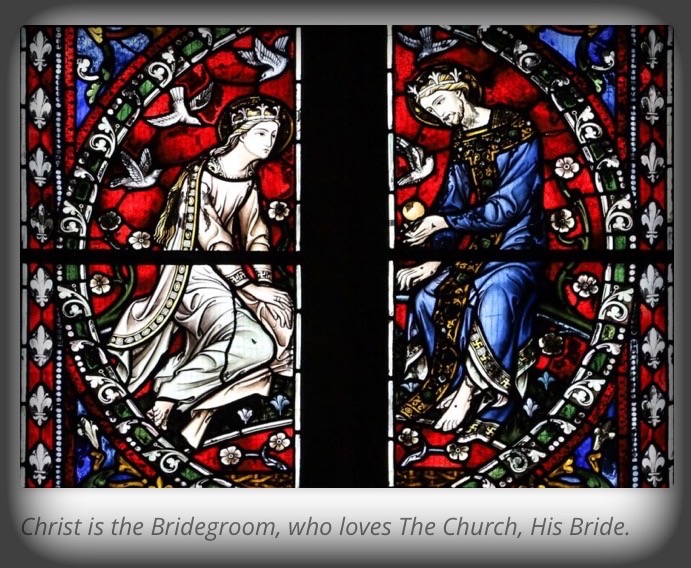
HOPE OF THE BRIDE
“What then of the bride’s hope, her aching desire, her passionate love, her confident assurance? Is all this to wilt just because she cannot match stride for stride with her giant, any more than she can vie with honey for sweetness, rival the lamb for gentleness, show herself as white as the lily, burn as bright as the sun, be equal in love with him who is Love? No. It is true that the creature loves less because she is less. But if she loves with her whole being, nothing is lacking where everything is given. To love so ardently then is to share the marriage bond; she cannot love so much and not be totally loved, and it is in the perfect union of two hearts that complete and total marriage consists. Or are we to doubt that the soul is loved by the Word first and with a greater love?”
St. Bernard of Clairvaux
AVE MARIA, CHRIST IS KING!
 Carmelite Sister Martyrs